The morning hours are often a silent negotiation between rest and obligation. I know the feeling well: bargaining with the alarm clock and reading emails before my feet even touch the floor. In this rush, we, women, frequently negotiate the most important thing: a healthy morning breakfast. You will find this relatable: standing in the kitchen, busy preparing lunch for the day ahead, yet convincing yourself that a cup of coffee is sufficient fuel for the moment. A healthy morning breakfast feels like a small, worthy sacrifice for the sake of staying ahead. But it’s so wrong.
The way we fuel our bodies in the first hour does far more than satisfy hunger; it establishes the rhythm for our energy, patience, and cognitive focus. I used to grab whatever felt easiest, a piece of toast or a hurried bowl of cereal, and tell myself it was good enough, often skipping the first meal of the day entirely. Morning nourishment is easily overlooked in the chaos.
Why an unfed morning feels heavier than it should
I know that for a busy woman, the morning is a cognitive marathon, involving scheduling, emotional management, and strategic planning. When you perform these complex tasks without propeslf-cr nourishment, you are forcing your body to run on borrowed resources. While skipping breakfast might provide you with a temporary spike of adrenaline that mimics productivity, the biological reality is far less sustainable.
Without a fresh source of energy after a long night of sleep, your body must scramble to maintain balance, often releasing stress hormones like cortisol just to keep you alert. The cost of this debt usually comes due by mid-morning. It rarely manifests as simple stomach rumbling; instead, it shows up as emotional fragility.
I used to notice that my patience would wear thin over minor inconveniences. A slow internet connection became infuriating rather than annoying, or a request from a colleague felt heavier than it should. We often attribute this irritability to a lack of sleep or a difficult workload, but the root cause is often simpler: our body is signaling a lack of support. By delaying or skipping the first meal of the day, we inadvertently make our days more difficult, trying to build a productive day on a shaky foundation.
Turning morning nourishment into your anchor
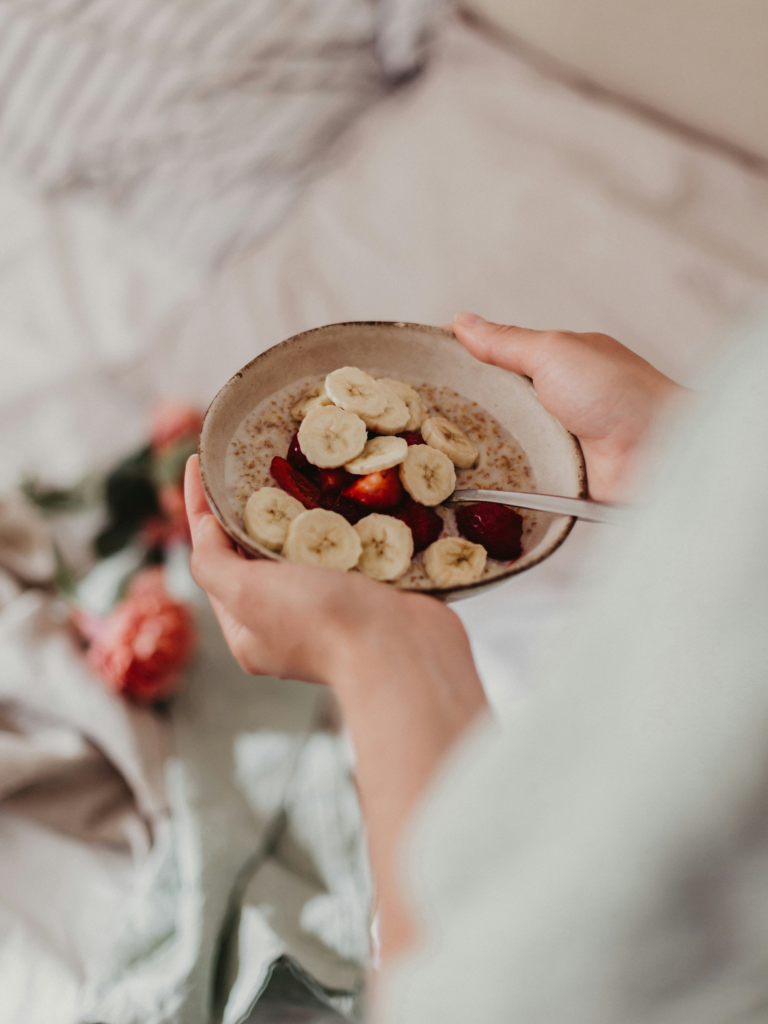
When I stopped looking at the first meal of the day as just another task on my list, everything shifted. It wasn’t about following strict rules anymore. I started to see a healthy morning breakfast as a kind of anchor, holding me in place. A well-fed body does the exact same thing.
Supporting myself with real morning nourishment gave me a quiet buffer against stress. I stopped feeling so jumpy. When something went wrong, I suddenly had the space to pause and breathe instead of just snapping into reaction mode. My energy stayed level instead of crashing halfway through the day. That steadiness was really all I was aiming for. It was simply about giving myself a fair chance to handle the day with a little more ease.
Starting small: Hydrate your body first thing in the morning

Before discussing food, there is one simple morning habit that fundamentally shifts how you feel: hydration. After sleeping for 7 or 8 hours, the body wakes up naturally dehydrated. This state often masquerades as fatigue, leading us to reach for caffeine when what we really need is water. Drinking a large glass of water before anything else is a gentle way to wake up your digestion and cognitive faculties. It signals to your internal systems that the day has begun.
I used to wonder exactly how much I needed. To give you a clearer reference point, Healthline outlines general daily water intake recommendations that vary by age and life stage:
- Children 4–8 years: about 5 cups (~1.18 liters | 40 oz)
- Children 9–13 years: 7–8 cups (~1.66–1.89 liters | 56–64 oz)
- Adolescents 14–18 years: 8–11 cups (~1.89–2.60 liters | 64–88 oz)
- Women 19 years and older: 9 cups (~2.13 liters | 72 oz)
- Men 19 years and older: 13 cups (~3.07 liters | 104 oz)
- Pregnant women: 10 cups (~2.37 liters | 80 oz)
- Breastfeeding women: 13 cups (~3.07 liters | 104 oz)
That number, 2.13 liters, used to sound daunting to me. But I didn’t get there overnight. I practiced. I started by just placing a glass on my nightstand, and slowly, it became a reflex. Now, I manage to drink at least 2 to 3 liters every day. It starts with knocking out the first 500 ml (about two glasses) right after I wake up. It gives me a head start on that daily goal and clears the brain fog faster than coffee does.
Of course, plain water isn’t the only way to get there. You can also boost your hydration through herbal teas or water-rich fruits like watermelon and cucumber, but that is a topic for another day. For now, just focusing on that first morning glass is enough.
The 3 things I look for in my first meal of the day
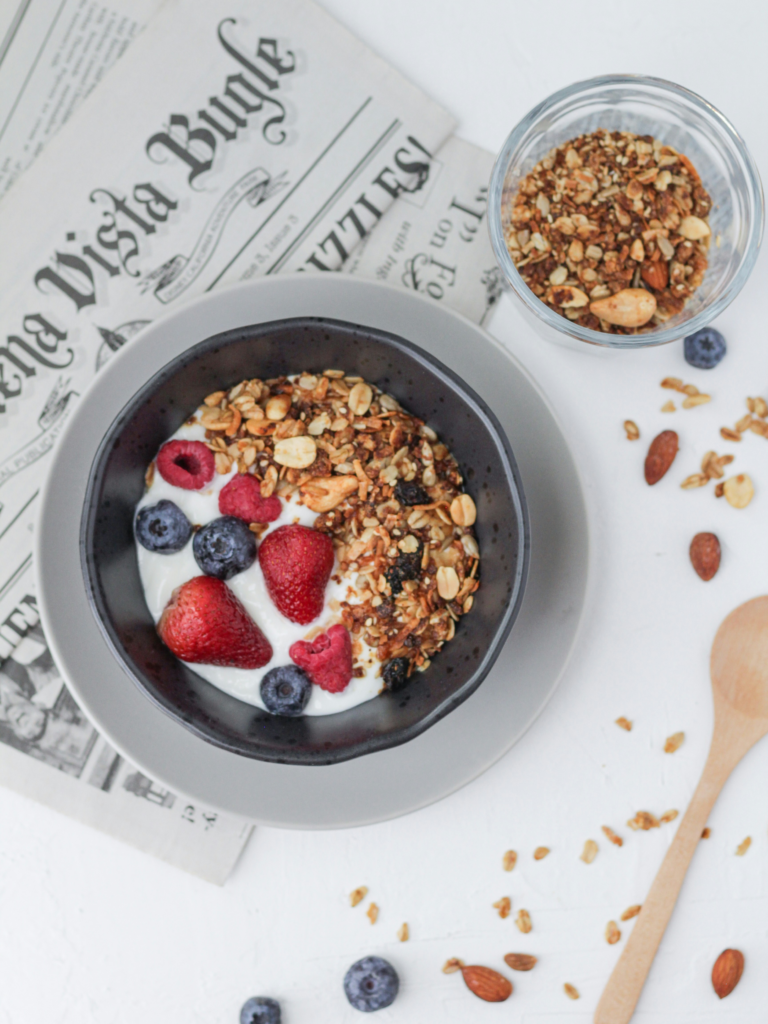
I learned that what I needed to eat for proper morning nourishment was different from knowing what actually worked for my body. I have definitely had mornings where I ate a sugary pastry or a bowl of light cereal, only to feel hungry and drained an hour later. That happened because my body burned through that sugar almost instantly.
To feel grounded until lunch, I realized I had to look beyond simple calories and focus on three specific things that completely changed how my morning nourishment supported me.
Protein is the foundation: If I could change only one aspect of my morning routine, I would prioritize protein. I found that protein acts like a safety signal to the brain, telling it that we are fed and secure.
Protein works because it stabilizes blood sugar and supports neurotransmitters responsible for focus and mood. Unlike refined carbohydrates, protein is digested slowly, preventing sharp spikes and crashes. It also provides amino acids used to produce dopamine and serotonin, chemicals that influence motivation, calmness, and emotional resilience. When protein is missing from the first meal of the day, the brain compensates by relying on stress hormones to stay alert. When it’s present, the body operates from steadiness instead of urgency.
However, the amount matters! I read on Healthline that for many women, aiming for roughly 20 to 30 g of protein at breakfast can truly trigger that sense of fullness and muscle support. That might sound like a math problem, but in real life, it’s simple: it looks like a cup of Greek yogurt, three eggs, or a smoothie with a solid scoop of protein powder. On the days when I do hit the number, I notice I finally step off that exhausting energy rollercoaster.
Healthy fats for focus: What makes them valuable is their role in slowing digestion and supporting brain function. Fat delays the emptying of the stomach, which means the energy from your meal is released gradually instead of all at once. This is why a breakfast with fat feels satisfying rather than fleeting.
From a neurological standpoint, the brain is nearly 60% fat, and many of its signaling processes rely on fatty acids. When healthy fats are present in your first meal of the day, they support mental clarity, emotional regulation, and sustained attention. Including fat turns breakfast from a quick refill into a stabilizing system.
According to Medical News Today, incorporating healthy fats like nuts and avocados can help reduce the risk of crashing later. To really get that brain-boosting benefit, I try to include a solid serving, roughly 10 to 15 g in my breakfast. That is about half a small avocado or a tablespoon of almond butter in my oats. When I include this, I don’t get that shaky, empty feeling at 10:00 AM because my blood sugar isn’t spiking and crashing.
Fiber to keep me grounded: Finally, I look for fiber. This is the ingredient that keeps things steady. Most quick breakfast options, like white toast, bagels, or muffins, are stripped of fiber, which is why they dissolve so fast in our stomachs and leave us hungry again. Fiber moves slowly through the gut, creating physical fullness and helping regulate how glucose enters the bloodstream. This slow movement is what keeps energy steady and hunger quiet.
Fiber also feeds beneficial gut bacteria, which play a role in inflammation control and even mood regulation. When fiber is missing from eating in the morning, hunger signals return quickly, often accompanied by cravings and mental restlessness. When it’s included, the body feels anchored, allowing you to move through the morning without constantly negotiating your next snack.
Again, Medical News Today notes that women should generally aim for about 25 g of fiber per day. To get a head start on that, I try to get 5 to 8 g in right at breakfast. That might be a cup of raspberries, a serving of oatmeal, or two tablespoons of chia seeds. By ensuring I get this amount, I get a consistent stream of vitality rather than a short burst.
Ultimately, the decision to eat a healthy morning breakfast is about how you choose to move through your life. It poses a question: Do you want to start your day feeling behind, rushing to catch up and running on adrenaline? Or do you want to start with a foundation of support? This shift is subtle. You may not notice a dramatic transformation immediately, but the cumulative effect of daily nourishment creates a powerful momentum.
Feeding yourself is a quiet power. It does not require applause or perfection. It simply requires a few minutes and the belief that you are worth the effort. Tomorrow morning, when the rush begins and the list of obligations looms large, pause and have your healthy morning breakfast. Give yourself the steady start you deserve. The emails can wait five minutes, but your well-being should not.