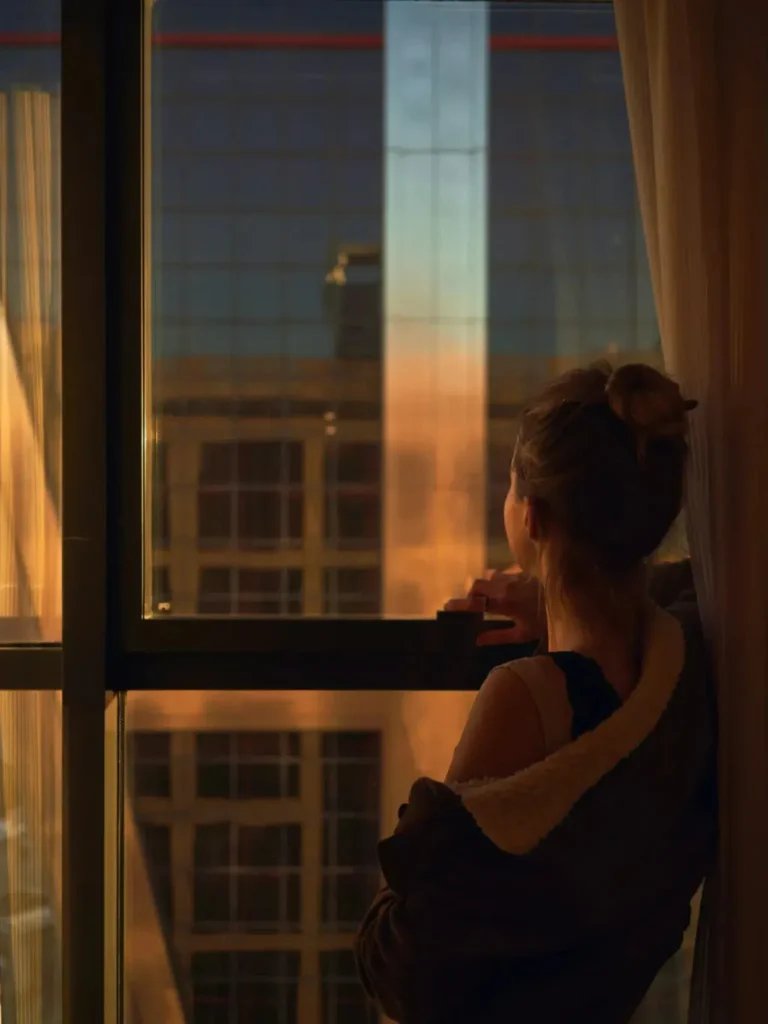
The Moonstone, authored by Wilkie Collins, has been sitting on my bedside table for over a year. Somewhere around the middle of the book, there’s a faded receipt I used as a bookmark, slipped in during a night I was certain I’d be back the next evening. I wasn’t. The book stayed, the receipt stayed, and I kept walking past both of them.
What’s strange is that The Moonstone is exactly the kind of book I should have torn through. Wilkie Collins writes with a slow, atmospheric authority, a Victorian mystery that tightens its grip so gradually you don’t notice until you are already addicted. It deserved better than a year and a receipt bookmark. But here I am, wasting a perfectly good mystery on a life that forgot to slow down.
I did my master’s in English literature. Reading wasn’t a hobby I scheduled. It was the primary texture of my days. I read in cafés, one cup of my favorite chai going cold beside me while I stayed locked inside a novel for two hours straight. I read in waiting rooms, in queues, in the minutes before lectures began. I read PDFs on my phone while walking, genuinely convinced I was managing both the pavement and the prose. Reading was how I processed the world, how I rested, how I felt most like myself. It was, without exaggeration, a form of self-care before I even had language for that phrase.
Then responsibilities arrived with my age, the way they do as a gradual accumulation. Family. Home. Work that followed me past office hours. A life that required consistent showing up in ways my master’s years never demanded. But reading, which had always fit naturally into the margins of my day, stopped fitting. It just kept getting bumped, quietly, by things that felt more urgent.
In the evenings I did sit down with The Moonstone, something predictable happened. I’d find my page, settle in, read a paragraph, and just like that, my mind would quietly abandon the room. Some half-finished work task would resurface, or the memory of a message I’d left unanswered would nudge its way in, and before I’d even registered the drift, my attention had already followed.
Those thoughts once dissolved effortlessly into whatever story held me, swallowed whole by the narrative before they could take root. These days, they surface with a quiet persistence, pulling focus away from the page so gradually that I only notice once I am already gone. The book stays open in my hands, warm and familiar, while my mind has drifted somewhere between tomorrow’s to-do list and a conversation I keep meaning to have.
You recognise this feeling, I think. The one where you sit in one place while your thoughts have quietly relocated somewhere else entirely. Your eyes move across a line, absorb nothing, and you return to it, reading the same words again with the same hollow result. It has nothing to do with the book and everything to do with what a full, demanding life does to the parts of you that require stillness.
When your attention has been pulled in too many directions for too long, the quieter pleasures are always the first to show the wear. I noticed this about myself with a kind of bare, uncomplicated honesty. It was just the plain acknowledgement that something had shifted, and I was only now catching up to it. So I am building something back, carefully. Just a small, honest routine I can actually keep.
Nights work best for me. After everything the day asked for, the hour before sleep carries a different quality — the house settles, the mental chatter loses its urgency, and for the first time since morning, there is room for something slow. I am learning to use that window with intention. A face mask goes on, which sounds incidental but matters more than I expected. The candle is there too, sometimes. Suddenly I cannot scroll, cannot migrate to another task, cannot do much besides lie still and let the pages turn. Some nights that means five pages. Some nights it means twenty. I have stopped holding either against myself, because the point was about returning to something that had always been mine.

I have also started keeping a reading list. Fiction and literary classics, mostly. The kind of writing that asks you to slow down rather than race through it, where the pleasure lives in the sentences as much as the story. Some poetry, because a single poem demands so little time and returns so much, which feels honest for where my attention currently stands. And essays, longform writing from people who think carefully and take their time on the page. This kind of reading reminds you what an unhurried mind feels like, which is precisely what I am trying to find my way back to.
The next book on the pile is already decided, and I am keeping the title to myself for now. Because I want to come back here and tell you about it properly, once I have actually lived inside it for a while.
What I am learning slowly is that rebuilding a reading life has everything to do with making the conditions honest enough that you actually show up. A consistent time that doesn’t fight your exhaustion. Small rituals that ease you into stillness rather than demanding it. A reading list that genuinely excites you rather than one that makes you feel behind. These are unglamorous adjustments, but they are what actually move a book forward when motivation alone has stopped being enough.
If you have a half-read book somewhere in your home right now, the book is rarely the problem. Something about the conditions around it stopped working, and that is honestly the more useful place to begin.